
Two ways to close the top
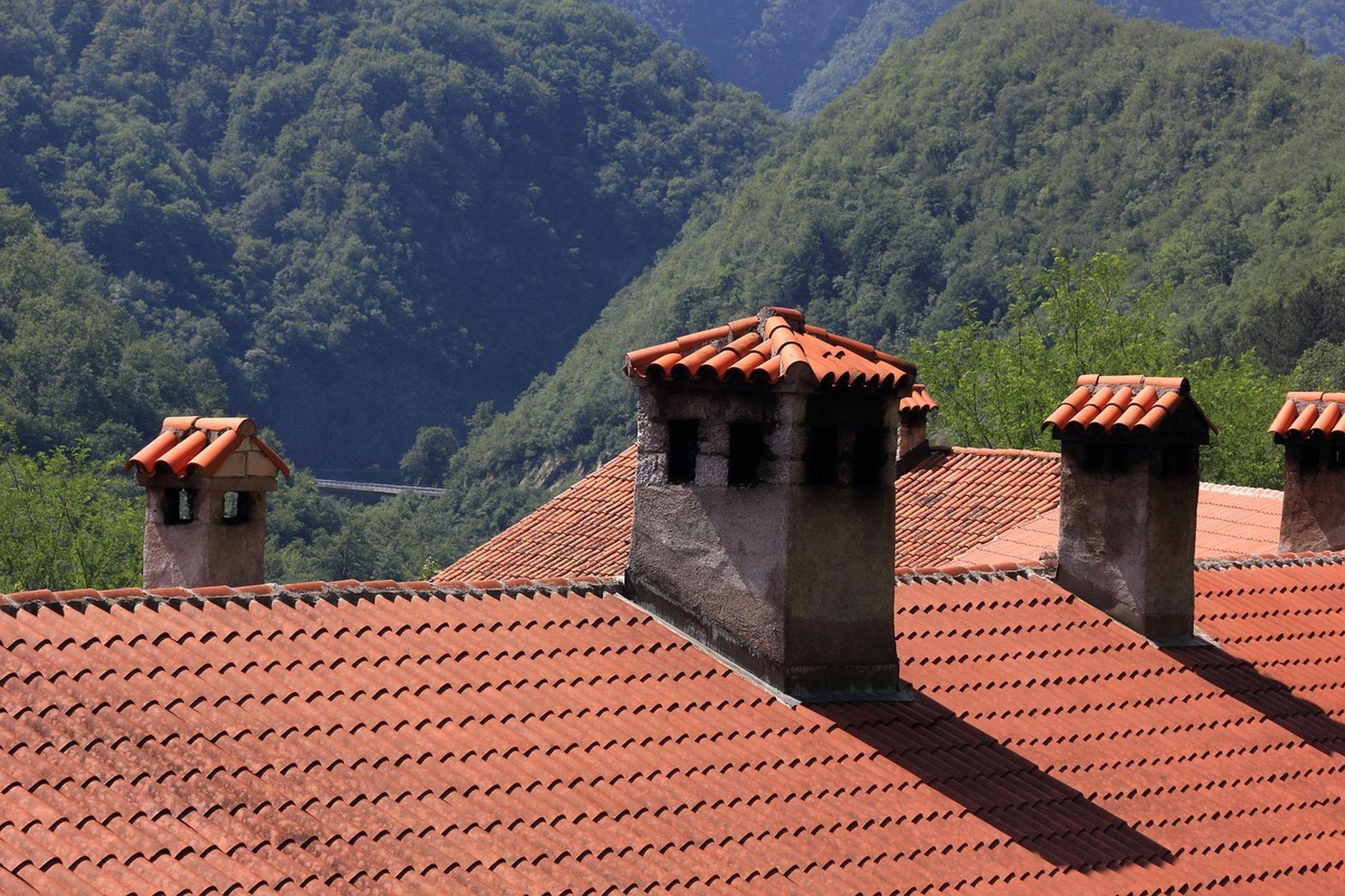
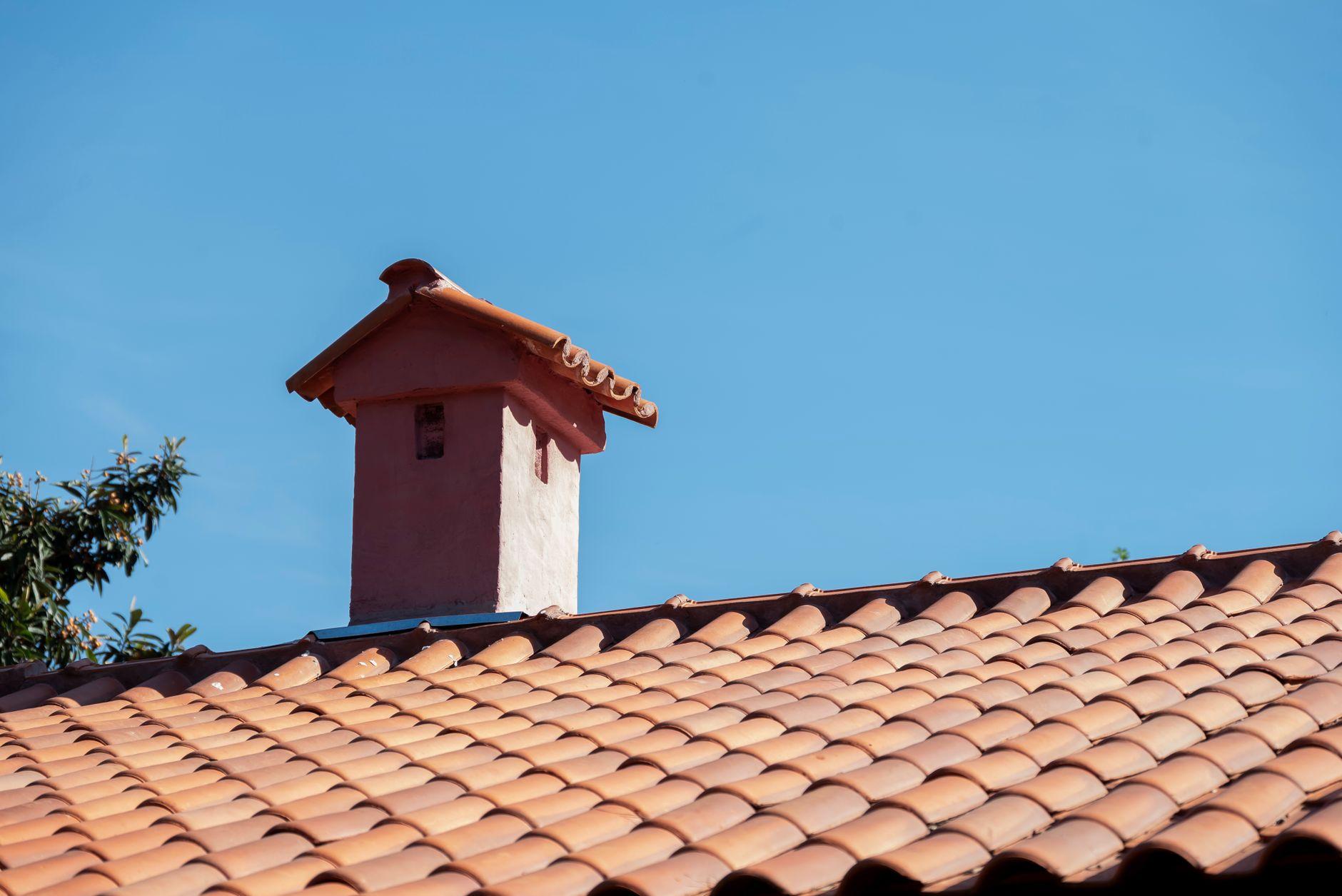
Walk down almost any street in Montebello and look up. Some chimneys wear a small square hat perched on one clay tile. Others have a wide metal lid covering the whole top, sitting on legs over the brick. Both are chimney caps. They do the same basic work, keeping animals, leaves and rain out while letting smoke escape, but they do it in different ways and at different prices.
Which one you want depends mostly on how many openings your chimney has, what the top of the masonry looks like, and what has been getting in.
The single-flue cap
This one fits a single flue tile. It has a mesh skirt around the sides and a lid on top, and it fastens either by clamping around the outside of the tile or with a band inside it.
Where it fits: a chimney with one flue and a crown in decent shape. That describes a large share of the older single-fireplace houses in town.
Strong points: it is the least expensive way to shut out birds and rats, it is small and tidy from the street, and it is quick to fit.
Weak points: it only guards the tile it sits on. If the chimney has a second opening beside it, that one stays open. It also does nothing for the crown, which keeps taking every winter storm on its bare face.
The full top cap
This is a wide hood, sometimes called a top-mount or multi-flue cap, that covers the entire top of the chimney. The mesh runs around the perimeter and the lid sits above all the flues at once. It fastens to the outer edge of the crown or the top course of brick.
Where it fits: chimneys with two or more flues side by side, flue tiles of uneven height, or tiles too short or odd-shaped to hold a clamp.
Strong points: it closes every opening at once, so there is no forgotten flue for a rat to use. It shelters the crown from direct rain, which slows down cracking. A raccoon has a harder time prying up a wide fastened hood than a small clamp cap.
Weak points: it costs more, especially when it has to be bent to a custom size. It also needs a sound edge to fasten to; on a crumbling crown it has nothing to hold.
Side by side
| Question | Single-flue cap | Full top cap |
|---|---|---|
| How many openings it closes | One | All of them |
| Shields the crown from rain | No | Yes, for the most part |
| Effect on the price | Simplest job | Costs more |
| Needs a sound crown edge | Less so | Yes |
| Typical chimney | One fireplace, one tile | Fireplace plus a heater flue, or several fireplaces |
Both are quoted after we measure at Stokes Chimney Services. A small stainless cap on one round tile is the simplest job; a copper hood made for a wide three-flue top costs the most.
A third case: the factory-built chimney
Some Montebello houses, mostly remodels and newer additions, have a metal fireplace with a metal flue pipe hidden inside a wood-framed box on the roof. Those chimneys do not take a standard masonry cap. The pipe needs the cap its maker tested with it, and the box around it needs a metal lid, the chase cover, that sheds water and has an opening for the pipe. When that lid rusts, it is often rats, not rain, that notice first. Our chase cover page covers that job.
And the top damper option
There is also a cap with a lid that closes, worked from the fireplace by a cable. It seals the flue at the top when the fireplace is not in use, which keeps out air and animals together. It suits a chimney whose lower damper is broken or missing, and it costs more than a fixed cap. We will mention it if it fits your chimney; it is not the answer for every house.
Which one we usually suggest
For a one-flue chimney with a crown that is in fair shape, a single-flue stainless cap does the job and keeps the bill low.
For a chimney with more than one opening, we nearly always suggest the full top cap. Capping one flue and leaving its neighbor open is a little like locking the front door and leaving the back one wide.
For a chimney that has already had raccoons, we lean toward heavier metal and solid fastening whichever style you pick, since an animal that knows the way in will test whatever you put up.
Getting a price for your roof
Send us a short description through the form: how many tiles or pipes stick out of the top, whether the house is one story or two, and whether anything has been getting in. We reply with which style we would fit and a written price, then confirm it on the roof before ordering.
What comes with either cap
Either way, we look down the flue before fastening anything, so nothing is sealed inside. If there is nest material, it comes out, and if the flue is due a sweep, that runs from $445 and can be done the same trip. We set the screen so it does not choke the draft, and we send photos of the finished top.
For more on the price itself, see what sets the price of a chimney cap, or our cap installation page. If you are not sure what is on your roof right now, the visit answers that too.
To book the cap visit, or just ask which style suits your chimney, reach us through the contact page. Give the street and a line about the roof, and we will be in touch.
Something Up There at Your House?
Stokes works from Montebello across Rosemead, Downey, Whittier and nearby towns. We take out what moved into the chimney, sweep the flue and fit a screened cap, with a written price for anything more.